Pages

Showing posts with label Radeon. Show all posts

Thursday, March 28, 2013

Featured Game: S.T.A.L.K.E.R.: Clear Sky

Plays on the same hardware as SoC
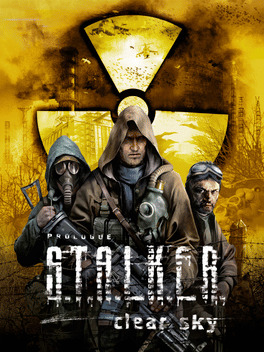
Year: 2008
Genre: First-Person Shooter, Survival Horror
Recommend: Depends


If you can run S.T.A.L.K.E.R.: Shadow of Chernobyl on your netbook, you'll be happy to know that its prequel, Clear Sky, will run on exactly the same hardware. The minimum system requirements for the game are unchanged, although it takes more juice to run the game with more eye candy, like volumetric light and fire, DirectX 10 support, and fancy weather effects. If you enjoyed the first game, it wouldn't hurt to give Clear Sky a try, and flex some GPU muscle in the process.

What you'll need

Reviews and Awards

Clear Sky earned some mixed reviews; on average, the game is the worst-rated in the S.T.A.L.K.E.R. series. The best rating came from GamesTM, with a 90/100 for "transform[ing] grim fantasy into a startlingly real-world experience." On the other hand, X-Play wasn't so kind, awarding Clear Sky a 60% for its boring environments, numerous bugs, and antiquated gameplay. GameSpot nominated the game for Best Atmosphere in 2008, but it was shot down by Dead Space.

Tips

OK, I'll admit it. There's no netbook out there that meets Clear Sky's recommended requirements.  I suggest starting off at medium settings at your netbook's native resolution, then tweaking settings from there.
http://upload.wikimedia.org/wikipedia/commons/e/e9/Stalker_Clear_Sky_screenshot_god_rays_01.jpg
Sunbeam effects; thanks, Wikipedia

Tuesday, December 18, 2012

AMD's Newish Fusion Processor, the C-70

http://upload.wikimedia.org/wikipedia/en/thumb/1/13/AMD_Radeon_logo.svg/2000px-AMD_Radeon_logo.svg.png
AMD netbooks have this sticker, typically
 On September 1st of this year, AMD silently released its new C-70 processor, which can be considered a successor to their older C-60 part. The processor itself is nearly identical to the previous model. The only difference is the integrated graphics processor, which is now called the Radeon HD 7290 instead of the 6290, clocked at the same speeds, 276 MHz and 400 MHz for boosted mode, respectively. Some sites say the C-70 has Radeon HD 6290 graphics, so I suspect the new name is for purely marketing reasons. On the chipset side, the C-70 comes with AMD's updated chipset, the A68M, instead of the older A50M chipset that lacks USB 3.0 and native SD card and Ethernet support. Currently, the C-70 can be found in large netbooks such as the Acer Aspire One found here at Newegg, shown below. It comes with one USB 3.0 port and a multicard reader, unsurprisingly enough, plus a 64-bit copy of Windows 8. The new C-70 is nothing to be excited about, but should be worth the consideration of new netbook buyers or those wanting to upgrade an old single-core Atom netbook.
Acer Aspire One AO725-0494 AMD Dual-Core Processor C-70(1.00GHz) 11.6" 4GB Memory 320GB HDD AMD Radeon HD 6290 Notebook
The Acer Aspire One AO725-0494
 

Tuesday, August 28, 2012

A "Come on, Intel!" Moment

It seems like the more I research the N2600 and its accompanying GPU, the GMA 3600, the less powerful they become. See, the GMA 3600 has a core clock of 400 MHz, which is great compared to previous generations. Problem is, that only applies to the shader and texture mapping units of the GPU. The PowerVR SGX545 core that the GMA 3600 is based on doesn't come with any Render Output units, or ROP's. Intel adds 4 of them, just as the GMA 950 had, and twice as many as the GMA 3150. Here's the rub: they can clock the ROP's at whatever speed they care to use, and they chose 200 MHz. Slowing down the ROP's reduces performance, naturally, enough to keep the GMA netbook series from playing Half-Life 2 (without tweaking). Is it enough to make performance worse than previous generations? Absolutely not. The new GMA 36x0 is better or equal in every way. The margin of improvement is just smaller. In the majority of applications, the GMA 3600 can't compete with the GeForce FX 5600, released over 9 years ago. It's more of a super Radeon Xpress 1150, and even then the Radeon integrated graphics can beat the GMA 3600 in memory bandwidth with a dual-channel DDR2-800 configuration.

Friday, June 29, 2012

A Few Words

First, if you'd like to have your favorite game featured on the blog, either write a comment on one of my posts or send an email to kory.l.hansen-[AT]-gmail.com. I would be more than happy to take a look at your game.

Second, increasing game performance can be as easy as running an installer and rebooting. These installers contain graphics drivers, pieces of software used to communicate with the integrated graphics processor inside your netbook. Updating the existing drivers on your system can add new features, fix bugs, or increase performance. To update your drivers, visit the following websites:

*Intel GMA 950 - intel.ly/LVHfWQ
*Intel GMA 3150 - intel.ly/qyy1Os
*Intel GMA 36x0 - intel.ly/Llt7VX
*AMD Radeon HD on Windows XP - http://sites.amd.com/us/game/downloads/Pages/radeon_xp-32.aspx#1
*AMD Radeon HD on Windows Vista/7 32-bit - http://sites.amd.com/us/game/downloads/Pages/radeon_win7-32.aspx
*AMD Radeon HD on Windows Vista/7 64-bit - http://sites.amd.com/us/game/downloads/Pages/radeon_win7-64.aspx

Friday, June 22, 2012

An Introduction to AMD's Second-Gen Fusion Processors: Brazos 2.0

In this lovely month of June, AMD rolled out the successor to Zacate, Brazos 2.0. Not much is new in this release, merely higher speeds. The E1-1200 is meant to replace the E-300, bumping up the CPU speed by 100 MHz and the GPU by 12 MHz. For some reason AMD downgraded the memory controller in the E1-1200 to DDR3-1066 instead of DDR3-1333, like the E-300 had. The E-450 has been upgraded by the E2-1800, with a 50 MHz increase in the CPU clock. The GPU has been pushed up to 523 MHz without boost and 680 MHz with boost. These are 3 and 13% gains, respectively. AMD chose to keep the DDR3-1333 memory controller here. Overall, Brazos 2.0 is not much of an improvement, but if cost is not a factor, there's no reason to buy an older Zacate machine.

Monday, June 18, 2012

An Introduction to AMD's Fusion CPU's: Zacate

Along with Ontario, AMD released a more powerful line of mobile Fusion processors codenamed Zacate. These are designed for bigger netbooks and small laptops. There are 4 flavors of Zacate to choose from, 3 of which are dual-core. The only single-core, the E-240, is clocked at 1.5 GHz with a Radeon HD 6310 running at 500 MHz. Keep in mind that the Radeon HD 63x0 series is nothing more than a faster version of the HD 62x0 series. Moving on to the dual-cores, the E-300 runs at 1.3 GHz with its GPU at 488 MHz. The E-350 works at 1.6 GHz, and the GPU goes 4 MHz faster. Finally, the E-450's CPU is a tad faster at 1.65 GHz. Unlike the Ontario C-60, the E-450 does not get a CPU speed boost under load; however, the GPU does, clocking between 508 and 600 MHz. Zacate processors are the best of all mentioned so far for gaming, although the chassis housing them is almost guaranteed to be bigger than 10.1".

Tuesday, June 12, 2012

An Introduction to AMD's Fusion CPU's: Ontario

Not wanting Intel to monopolize the netbook market, AMD unveiled the Fusion processors in early January of 2011. The lower-end of them, the Ontario series, consists of one single-core C-30 (1.2 GHz) and two dual-core C-50 and C-60, both at 1 GHz. All of them have a TDP of 9 W. The C-60 is a special processor in that it can boost the speed of the CPU (by 33%) and GPU under load. All Ontario processors have a Radeon HD 62x0 GPU at 276 MHz standard clock, with the C-60 adding 45% on demand. This puts its capabilities at about half of the Radeon HD 6350, more or less. Ontario-powered netbooks tend to cost a bit more than Cedar Trail ones, and rightly so. The amount of games playable on Fusion is far greater than any Intel netbook, so if you're not extremely tight on cash, go for a Fusion netbook.